
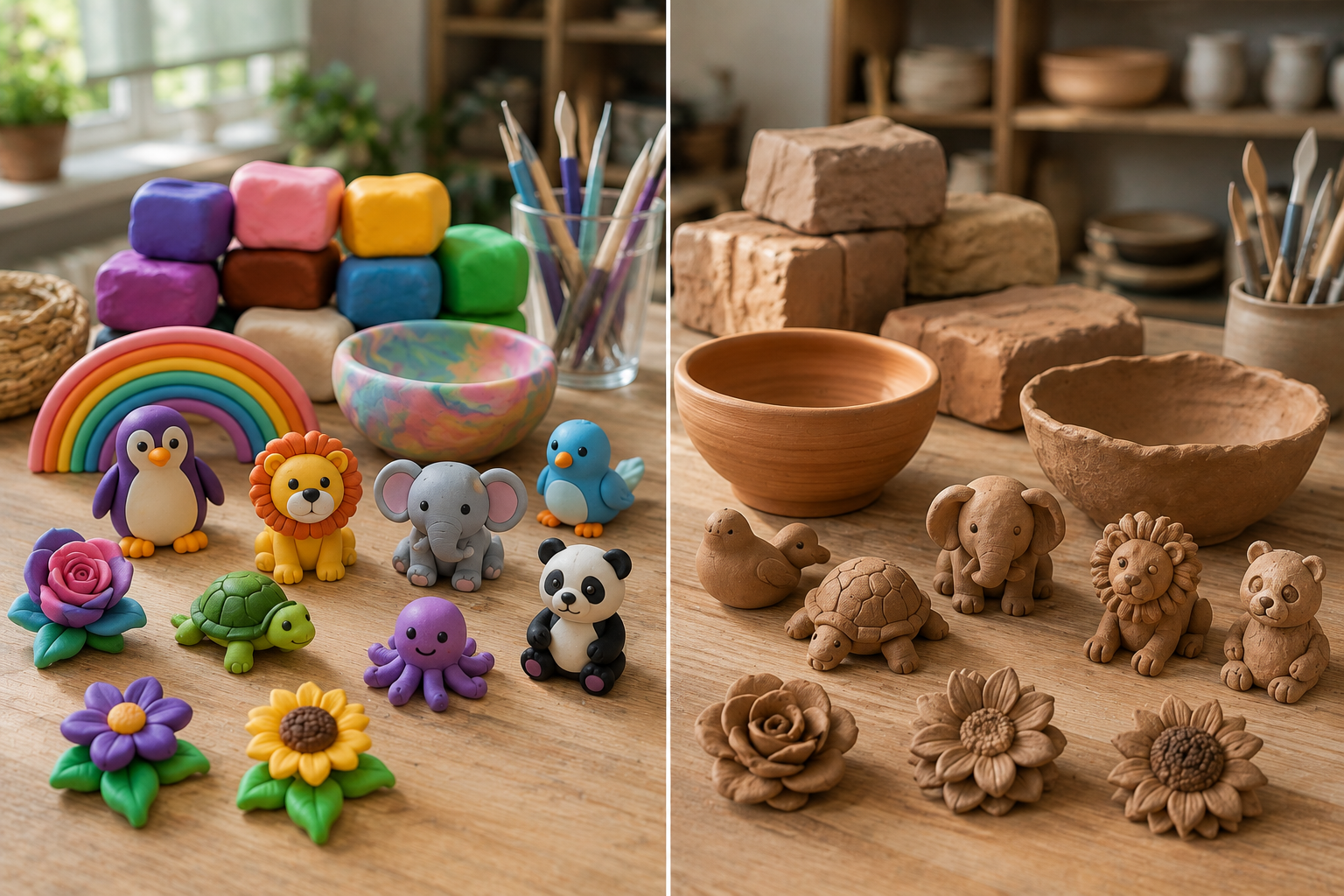
When starting a clay project, one of the first decisions you’ll face is choosing the right type of clay. Two of the most popular options are air-dry clay and traditional clay. While they may look similar at first, they differ significantly in how they are used, finished, and maintained. The right choice depends on your goals, experience level, budget, and the type of project you want to create.
Instead of asking which option is universally better, it’s more useful to understand where each material performs best. Both have unique advantages, and knowing their strengths can help you avoid common mistakes and achieve better results.
What Is Air Dry Clay?
Air-dry clay is a modeling material that hardens naturally when exposed to air, eliminating the need for kiln firing. It typically dries within one to three days and is popular among beginners, hobbyists, and DIY crafters. Commonly used for ornaments, figurines, and home décor projects, it is valued for its ease of use and the ability to work with it at home without specialized equipment.
(A kiln is a specialized high-temperature oven used to harden and strengthen clay, ceramics, pottery, glass, and other materials.)
What Is Traditional Clay?
Traditional clay, also known as ceramic or pottery clay, is a natural material that must be fired in a kiln to become hard and durable. It is widely used for pottery, sculptures, and functional items such as bowls, mugs, and plates. Many artists prefer traditional clay because it offers excellent strength, versatility, and the ability to create long-lasting ceramic pieces.
Ease of Use
Air-dry clay is generally easier for beginners because it requires no kiln, firing, or advanced techniques. You can shape it, let it dry, and decorate it at home with minimal preparation. Traditional clay, however, involves a more complex process, including careful drying and kiln firing, which requires additional equipment and knowledge to prevent cracking or damage.
Tip: If you’re completely new to sculpting, start with a small air-dry clay project to learn shaping, smoothing, and detailing techniques before moving on to traditional pottery.
Durability and Longevity
Durability is one area where traditional clay clearly stands out.
Once fired, ceramic clay becomes strong enough for everyday use. Many ceramic bowls, mugs, and plates remain functional for decades. Properly glazed pottery is resistant to moisture and can handle regular handling without damage.
Air-dry clay, while solid after drying, remains more delicate. It can chip, crack, or break if dropped. It is also sensitive to moisture unless sealed properly.
Imagine creating two different projects:
- A decorative sculpture displayed on a shelf.
- A bowl intended for daily use.
The sculpture could be successfully made from either material. The bowl, however, would require traditional clay because it needs durability and water resistance.
For functional items, traditional clay is usually the better choice.
Cost and Accessibility
Budget is often a deciding factor, especially for beginners.
Air-dry clay is relatively affordable and requires few additional supplies. Most projects only need basic sculpting tools, paint, and a protective sealant.
Traditional clay may seem inexpensive at first, but the total cost can increase quickly. Artists often need:
- Access to a kiln
- Pottery tools
- Glazes
- Studio space or firing services
These additional expenses can make traditional clay less practical for casual crafters.
For someone exploring clay as a hobby, air-dry clay offers a lower-risk way to learn and experiment.
Creative Possibilities
Both materials offer creative freedom, but they excel in different ways.
Air-dry clay is particularly useful for decorative and mixed-media projects. Many artists combine it with materials such as wood, fabric, metal, or paint to create unique crafts and home décor items.
Traditional clay supports more advanced techniques, including wheel throwing, carving, glazing, and high-temperature firing. These processes allow artists to create professional-quality ceramics with a wide range of textures and finishes.
A pottery artist making handcrafted dinnerware will likely prefer traditional clay, while a DIY enthusiast creating personalized ornaments may find air-dry clay more practical.
The best option depends on the intended use of the finished piece.
Common Challenges and Tips
Every clay type comes with its own challenges.
Air-dry clay can dry too quickly, leading to cracks. Keeping unused clay wrapped tightly and allowing finished pieces to dry gradually can help prevent this problem.
Traditional clay requires patience during the drying stage. Pieces that retain moisture before firing may crack or even break in the kiln.
A helpful practice for both materials is to work in layers rather than creating extremely thick pieces. Thinner, evenly constructed projects generally dry more consistently and are less likely to develop structural issues.
Taking time during preparation often leads to better results than trying to rush the process.
Which One Should You Choose?
The best choice depends on your project. Traditional clay is ideal for durable pottery and professional ceramic work, while air-dry clay is better for beginners, decorative crafts, and budget-friendly projects. Both materials have unique strengths, but Air Dry Clay stands out for its convenience, accessibility, and versatility for everyday crafting.