
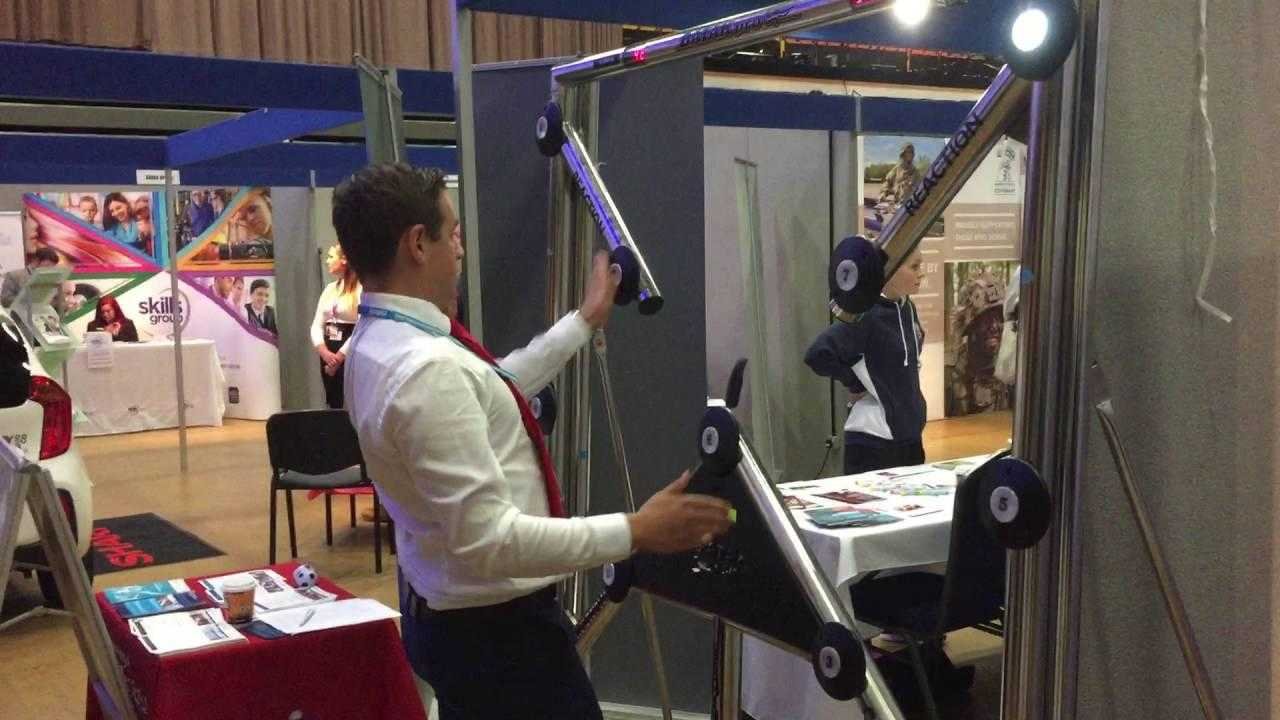
I’ve seen trade show games that look amazing on paper… and completely fail on the show floor.
And I’ve also seen very simple, almost boring-looking games pull nonstop crowds for three days straight.
The difference usually isn’t budget or technology.
It’s a handful of small, practical features that actually match how people behave at trade shows.
Here are 12 features every high-performing custom trade show game has, based on what works in real booths—not what sounds impressive in presentations.
1. Instant Understanding (No Explanation Needed)
If someone can’t understand your game in 3 seconds, they won’t play it.
The best games don’t need:
- Tutorials
- Staff explanations
- Instruction screens
People should know what to do just by looking at the screen.
If you have to explain it, simplify it.
A simple game that we designed
2. Short Play Time (Under One Minute)
Trade show attention spans are brutal.
High-performing games usually last:
- 30–45 seconds
- Maximum 60 seconds
Short games mean:
- More participants
- Less waiting
- Higher energy at the booth
Long games create queues. Queues create drop-offs.
3. A Strong Visual Hook From a Distance
Most people decide whether to stop from 10–15 feet away.
High-performing games:
- Have bold motion
- Use contrast and movement
- Look active even when no one is playing
If your game looks “static” from a distance, it’s invisible.
4. Clear Start Signal
This seems small, but it matters.
People hesitate when they don’t know:
- How to start
- Whether it’s okay to touch
- If it’s already in use
A simple “Tap to Start” or idle animation inviting interaction makes a big difference.
5. Simple Controls (One Action Is Enough)
One button. One tap. One gesture.
That’s it.
The more actions you add:
- The more mental effort required
- The fewer people who try
Trade show games perform best when the control logic is almost instinctive.
6. Built-In Competition or Achievement
People love knowing how they did.
High-performing games usually include:
- Scores
- Timers
- Accuracy percentages
- Leaderboards
It doesn’t need to be aggressive competition—just enough to create curiosity and replay.
7. Clear End Moment
A good game doesn’t just… stop.
It has a clear finish:
- Score screen
- Success/failure feedback
- “You did better than X% of players.”
This moment is where engagement peaks. Don’t waste it.
8. A Natural Transition to Brand Conversation
The game should create an excuse for staff to step in.
Something like:
- “Want to see how this connects to what we do?”
- “This challenge is inspired by our actual product workflow.”
- “Most people struggle here—this is exactly what we help with.”
High-performing games open conversations. They don’t replace them.
9. Balanced Branding (Not Overkill)
Too little branding, and people forget you.
Too much branding, people don’t enjoy the game.
The sweet spot:
- Brand visible, not dominant
- Logo at start or end
- Brand message tied to result or reward
When fun comes first, branding lands better.
10. Offline Reliability
This one is purely practical.
High-performing games:
- Run without internet
- Don’t depend on cloud calls
- Don’t crash mid-play
Trade show Wi-Fi is unpredictable. Your game shouldn’t be.
11. Easy Reset for the Next Player
After one person finishes, the next should be able to start immediately.
No:
- Reloading
- Manual resets
- Staff intervention
Fast resets keep energy high and queues moving.
12. A Purpose Beyond “Just Fun”
The best trade show games always have a reason:
- Education
- Awareness
- Product understanding
- Skill demonstration
Fun pulls people in.
Purpose makes the engagement valuable.
Final Thought
High-performing trade show games are rarely complex.
They’re:
- Fast
- Clear
- Visually inviting
- Easy to play
- Easy to connect back to the brand
If a game respects the chaos, noise, and time pressure of a real trade show floor, it performs.