
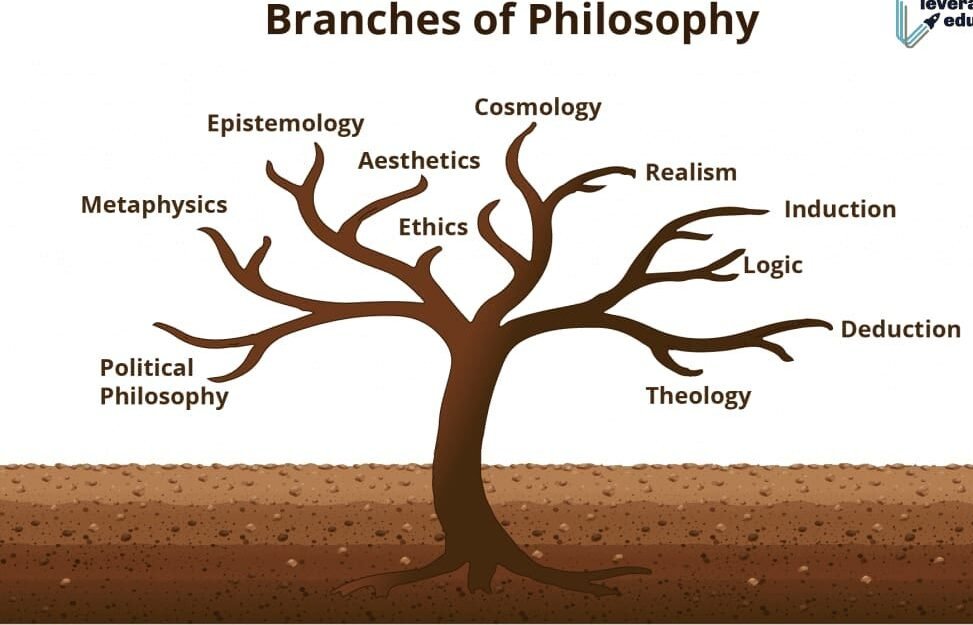
When people hear the phrase branches of philosophy, they often imagine ancient thinkers debating abstract ideas in distant centuries. But philosophy is not confined to lecture halls or dusty books. Its branches quietly shape the way we think, decide, argue, doubt, hope, and even scroll through our phones. Philosophy is not something we visit occasionally. It is something we live through daily.
Seen from this perspective, the branches of philosophy are not academic categories. They are mental tools we use to navigate life.
Metaphysics: The Questions We Ask at 2 a.m.
Metaphysics deals with the nature of reality, existence, and what lies beyond what we can see. But you do not need to read Aristotle to engage in metaphysics.
Any time you ask:
- “Is this all there is?”
- “Do things happen for a reason?”
- “Am I the same person I was five years ago?”
You are standing in metaphysical territory. Metaphysics shows up during moments of loss, spiritual curiosity, or deep self-reflection. It is the branch of philosophy we turn to when life feels bigger than logic and heavier than facts.
Epistemology: How You Decide What to Believe
Epistemology is the study of knowledge. It asks how we know what we know and what counts as truth.
In daily life, epistemology appears when you:
- Question a headline before sharing it
- Trust one source over another
- Wonder whether personal experience is more reliable than expert opinion
In the age of information overload, epistemology may be the most urgently used branch of philosophy. Every time you pause and think, “Is this actually true?” you are practicing it.
Ethics: The Silent Voice Behind Every Choice
Ethics explores right and wrong, good and bad, and how we ought to act. This branch rarely announces itself, yet it guides some of the most important decisions we make.
Ethics is present when you:
- Choose honesty even when lying is easier
- Feel guilt, pride, or moral conflict
- Debate fairness, responsibility, or harm
Ethics is not just about rules. It is about values. It is the internal compass that shapes character over time, often without us noticing.
Logic: The Structure Beneath Your Arguments
Logic is the branch of philosophy that studies reasoning. It helps distinguish strong arguments from weak ones and clarity from confusion.
You use logic when you:
- Spot contradictions in an argument
- Explain your point step by step
- Decide whether a conclusion actually follows from the facts
Logic does not tell you what to think. It teaches you how to think clearly, especially when emotions or persuasion try to take over.
Aesthetics: Why Beauty Moves You
Aesthetics focuses on beauty, art, taste, and emotional response. It asks why certain things feel meaningful, beautiful, or powerful.
This branch shows up when:
- A song makes you emotional for reasons you cannot explain
- A painting feels “right” without logical justification
- You debate whether art should be judged by intention or impact
Aesthetics reminds us that not everything important can be measured or proven. Some truths are felt rather than argued.
Political Philosophy: The Ideas Behind Systems and Power
Political philosophy examines authority, justice, freedom, and the role of the state. It operates beneath laws, debates, and social movements.
You engage with this branch when you:
- Question fairness in systems or policies
- Debate individual freedom versus collective responsibility
- Think about power, rights, and social obligations
Political philosophy shapes societies long before it appears in headlines. It defines what we consider acceptable, just, or necessary.
Philosophy as a Living Framework
Seen together, the branches of philosophy form a framework for human thought rather than a rigid academic structure. Metaphysics asks what exists. Epistemology asks what we can know. Ethics asks how we should act. Logic asks how we should reason. Aesthetics asks what moves us. Political philosophy asks how we should live together.
We do not move between these branches deliberately. We move between them naturally, often within a single conversation or decision.
Final Thoughts
The branches of philosophy are not separate paths meant only for scholars. They are interconnected ways of thinking that quietly guide everyday life. Philosophy does not begin when you open a textbook. It begins the moment you question, doubt, choose, or reflect.
In that sense, philosophy is not something you study after life happens. It is what helps you make sense of life as it unfolds.